The Federal Government has urged states to close delivery gaps and accelerate implementation of the Agro-Climatic Resilience in Semi-Arid Landscapes (ACReSAL) Project to deepen impact on livelihoods, food security and environmental restoration.
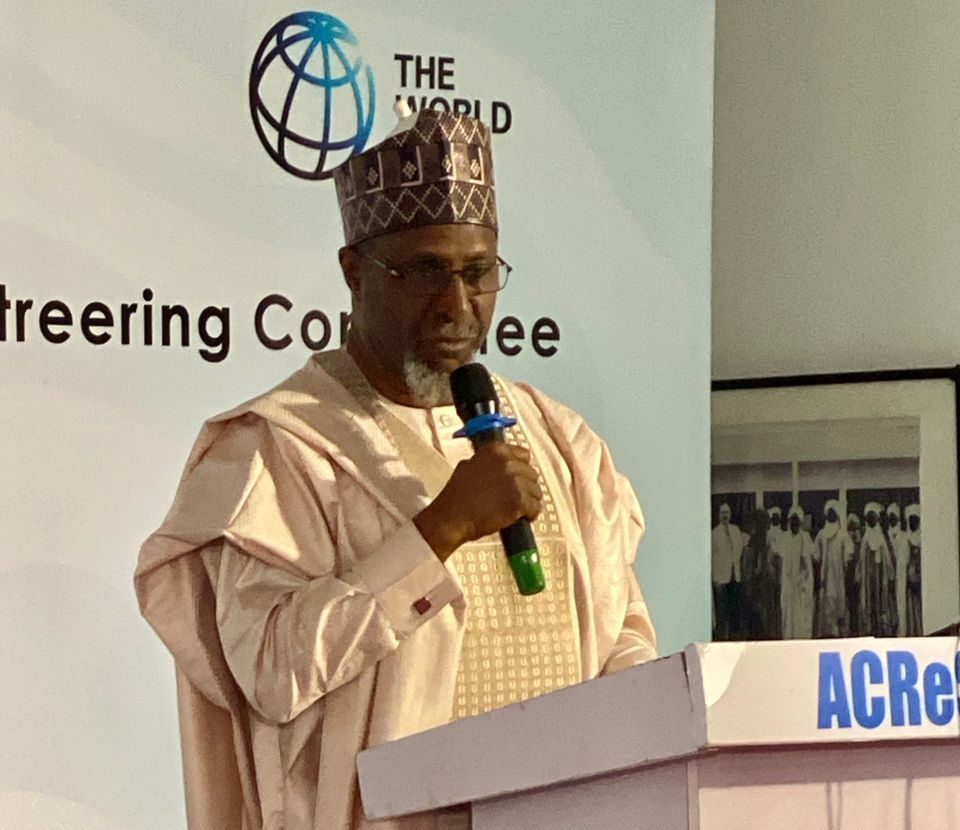
Balarabe Lawal, Minister of Environment, made the call on Thursday at the project’s Mid Term Review (MTR) meeting in Kaduna, describing the stage as a critical point for assessing progress and strengthening results.
“This is not a ceremonial exercise; it is a moment of reckoning,” he said, adding that the project must deliver “real, lasting transformation for our people and landscapes.”
Lawal acknowledged progress in land restoration, afforestation, watershed rehabilitation and livelihood support across participating states and the Federal Capital Territory (FCT).
He, however, noted that the project was “at the midpoint, not the finish line,” urging states to address implementation gaps and strengthen monitoring and evaluation systems.
Aliyu Abdullahi, Minister of State for Agriculture and Food Security, also described ACReSAL as central to Nigeria’s food security drive.
“ACReSAL is not simply an environmental project; it is a food security imperative,” he said, noting that land restoration directly enhances farmers’ productivity and livelihoods.
He called for scaling up climate-smart agriculture, improved access to inputs and stronger inclusion of women and youths.
Joseph Utsev, Minister of Water Resources and Sanitation, said sustainable water management remained key to achieving the project’s objectives.
“When land degrades, watersheds collapse and communities face water stress. Addressing this nexus is central to ACReSAL,” he said.
Utsev urged stronger integration of water resource management into land-use planning and community systems.
Gov. Uba Sani, of Kaduna State, said the state had identified over 22,000 hectares of degraded land for restoration.
Represented by Abubakar Buba, Commissioner for Environment, said 500 women, youths had been trained in biomass briquette production, while over 160 kilometres of drainage had been de-silted to address flooding.
“These interventions are already yielding results and strengthening resilience,” he said.
The ministers commended the World Bank for its support, stressing that stronger collaboration and accountability would be required to meet project targets.