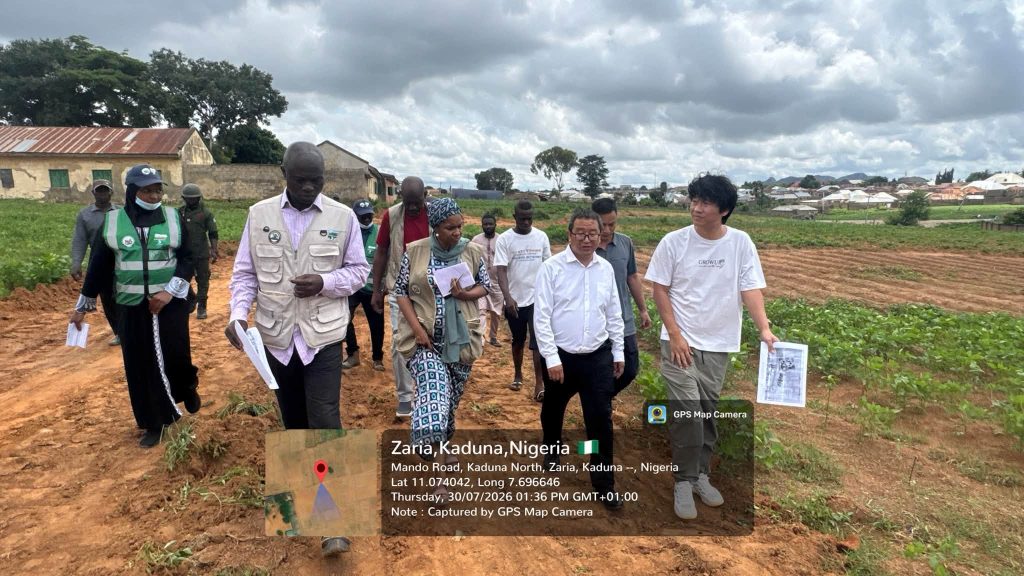
The Kaduna State Agro-Climatic Resilience in Semi-Arid Landscapes (ACReSAL) Project recently hosted a delegation from the World Bank on an Environmental and Social Framework (ESF) Technical Support Mission aimed at reviewing ongoing project implementation across the state.
The mission commenced with a field visit to the Rigasa Flood and Gully Erosion Control Project, where the delegation observed the payment of compensation to Project Affected Persons (PAPs), in line with the project’s environmental and social safeguard requirements.
The ESF team, alongside the Kaduna ACReSAL Project Implementation Unit, also visited woodlot establishments developed by the Kaduna ACReSAL Office to assess the progress of afforestation activities in the area.
The delegation proceeded to the Zaria and Kawo Flood and Gully Erosion Control project sites to evaluate the level of preparedness by contractors. The assessment focused on ensuring that all necessary safety and precautionary measures are in place before the commencement of civil works. These flood control projects form part of ongoing efforts to strengthen urban flood management and promote environmental sustainability across Kaduna State.
The World Bank delegation was led by Mr. Elijah Siakpere and Mr. Lucky Erhaze, who assessed the technical, environmental, and social components of the projects.
During the visit, the Kaduna ACReSAL Project Coordinator, Hadiza I. Halid, delivered a presentation highlighting the achievements recorded by the project. She also showcased images and updates from the Rigasa, Kawo, and Zaria Flood and Gully Erosion Control sites.
The ESF team engaged with community members, the Kaduna ACReSAL Project Implementation Unit, and contractors in interactive discussions focused on knowledge sharing, best practices, implementation challenges, and practical solutions for improving project delivery.
Speaking during the exercise, Mr. Elijah emphasized the importance of maintaining high engineering standards and ensuring that all interventions under the ACReSAL Project conform to international best practices.
The ESF team commended the commitment demonstrated by the Kaduna State Project Coordinator and the implementation team, while reaffirming the World Bank’s continued support towards the successful delivery of the project.
The mission also provided an opportunity for project engineers, climate change officers, and the Environmental and Social (E&S) Unit to jointly assess implementation progress, identify existing gaps, and outline strategic actions for the next phase of the project.
Mr. Lucky further called for increased community sensitization and stronger support for proper waste management, particularly discouraging refuse disposal into drainage channels to prevent blockages and reduce the risk of flooding.
The visit concluded with an interactive session that fostered knowledge exchange and highlighted best practices that could be replicated across participating states to enhance the successful implementation of the ACReSAL Project.